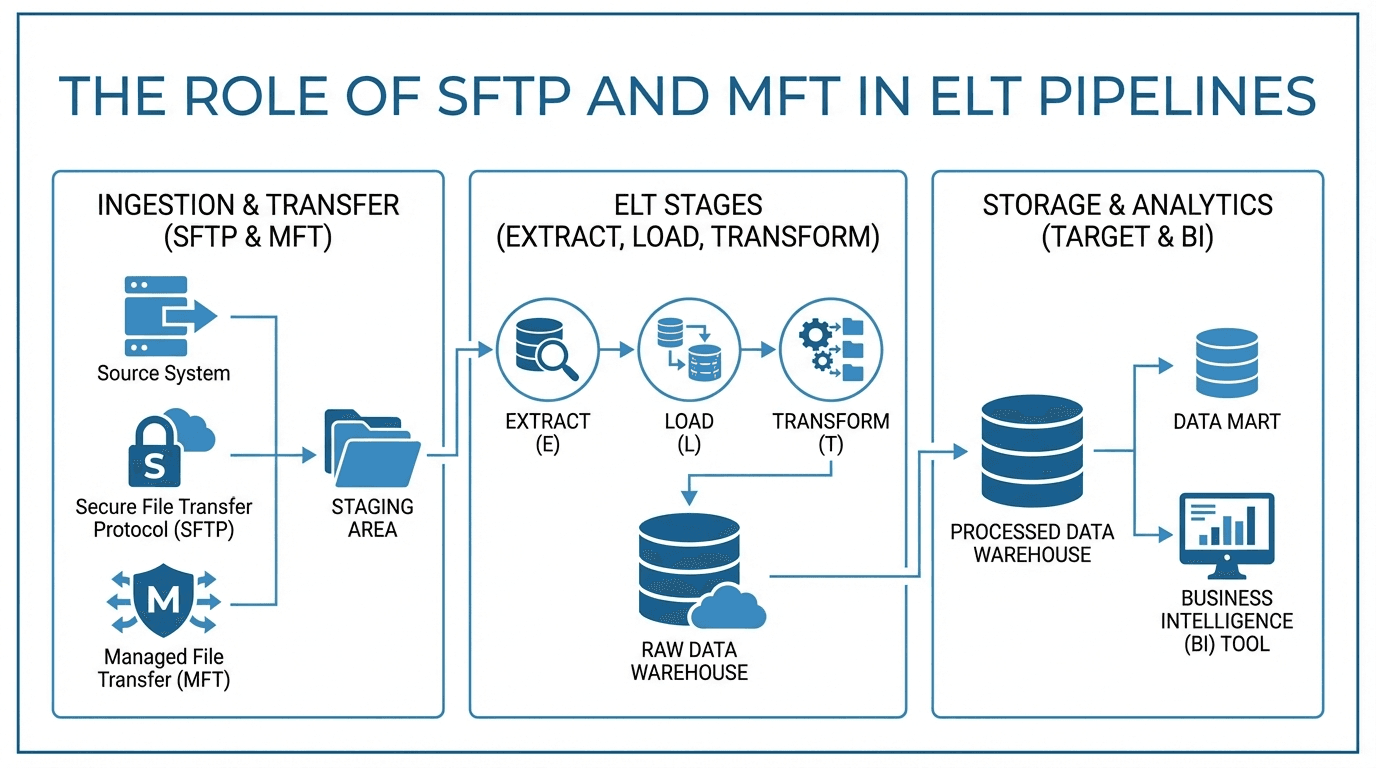
ELT (Extract, Load, Transform) has become a popular pattern for data integration, especially with the rise of cloud data warehouses. While much of the attention goes to the "Load" and "Transform" stages, the "Extract" stage is where the data journey begins. SFTP and Managed File Transfer (MFT) play a critical role in this first step.
Understanding ELT pipelines
An ELT pipeline moves data through three stages:
- Extract - Data is collected from source systems. These sources might be databases, APIs, SaaS platforms, or file-based systems like SFTP servers.
- Load - The raw, unprocessed data is loaded directly into a target system, typically a cloud data warehouse like Snowflake, BigQuery, or Redshift.
- Transform - Once the data is in the warehouse, transformations are applied using SQL or transformation tools like dbt. This approach takes advantage of the warehouse's compute power to handle heavy processing.
The key difference from traditional ETL is that data is loaded first and transformed later. This preserves the raw data and gives analysts flexibility to create new transformations without re-extracting from the source.
The role of SFTP and MFT in the extract phase
Many organizations rely on file-based data exchange. Partners, vendors, and internal systems frequently produce data as CSV, XML, JSON, or fixed-width files. SFTP and MFT are the tools that get these files into your pipeline securely and reliably.
Legacy system integration
Older systems often lack modern API capabilities. They generate flat files on a schedule and expect a file transfer mechanism to pick them up. SFTP provides a standardized, widely supported protocol for retrieving these files without requiring changes to the source system.
B2B data exchange
When exchanging data with external partners, SFTP is often the agreed-upon protocol. Partners upload files to a shared SFTP server, and your pipeline picks them up for ingestion. MFT platforms add automation, monitoring, and access controls on top of this exchange.
Security and compliance
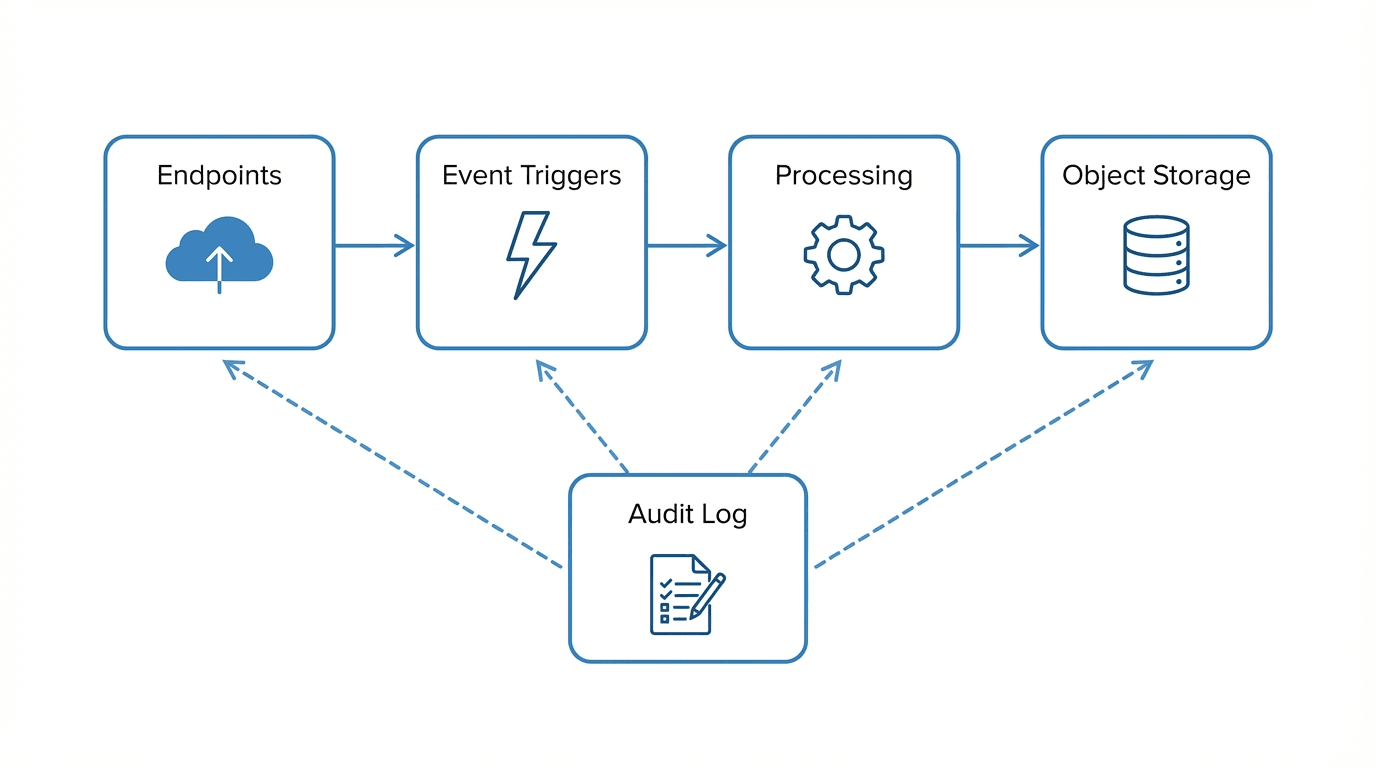
File-based data often contains sensitive information, such as financial records, healthcare data, or personally identifiable information. SFTP encrypts data in transit, and MFT platforms add encryption at rest, access controls, and detailed audit logs. These features help meet compliance requirements for frameworks like HIPAA, GDPR, and SOC 2.
Reliability and error handling
MFT platforms provide built-in retry logic, delivery confirmations, and alerting for failed transfers. This reliability is essential in a pipeline where missing or incomplete data can cascade into incorrect analytics downstream.
Benefits of SFTP and MFT in the ELT context
- Decoupled extraction - File-based extraction keeps the source system and the pipeline loosely coupled. The source produces a file, and the pipeline consumes it independently.
- Auditability - Every file transfer is logged with timestamps, user identities, and file metadata, providing a clear chain of custody.
- Protocol standardization - SFTP is supported by virtually every operating system and programming language, making it a reliable common denominator across diverse environments.
- Batch-friendly - ELT pipelines often operate in batch mode. File-based transfers fit naturally into batch workflows, where files represent discrete batches of data.
Integrating SFTP and MFT with ELT workflows
Here are practical patterns for connecting file transfers to your ELT pipeline.
Polling for new files
The simplest approach is to poll the SFTP server on a schedule. A pipeline orchestrator (such as Apache Airflow or Prefect) checks for new files at regular intervals, downloads them, and loads the contents into the data warehouse.
This works well for batch workloads where data freshness requirements are measured in hours rather than seconds.
Event-driven triggers
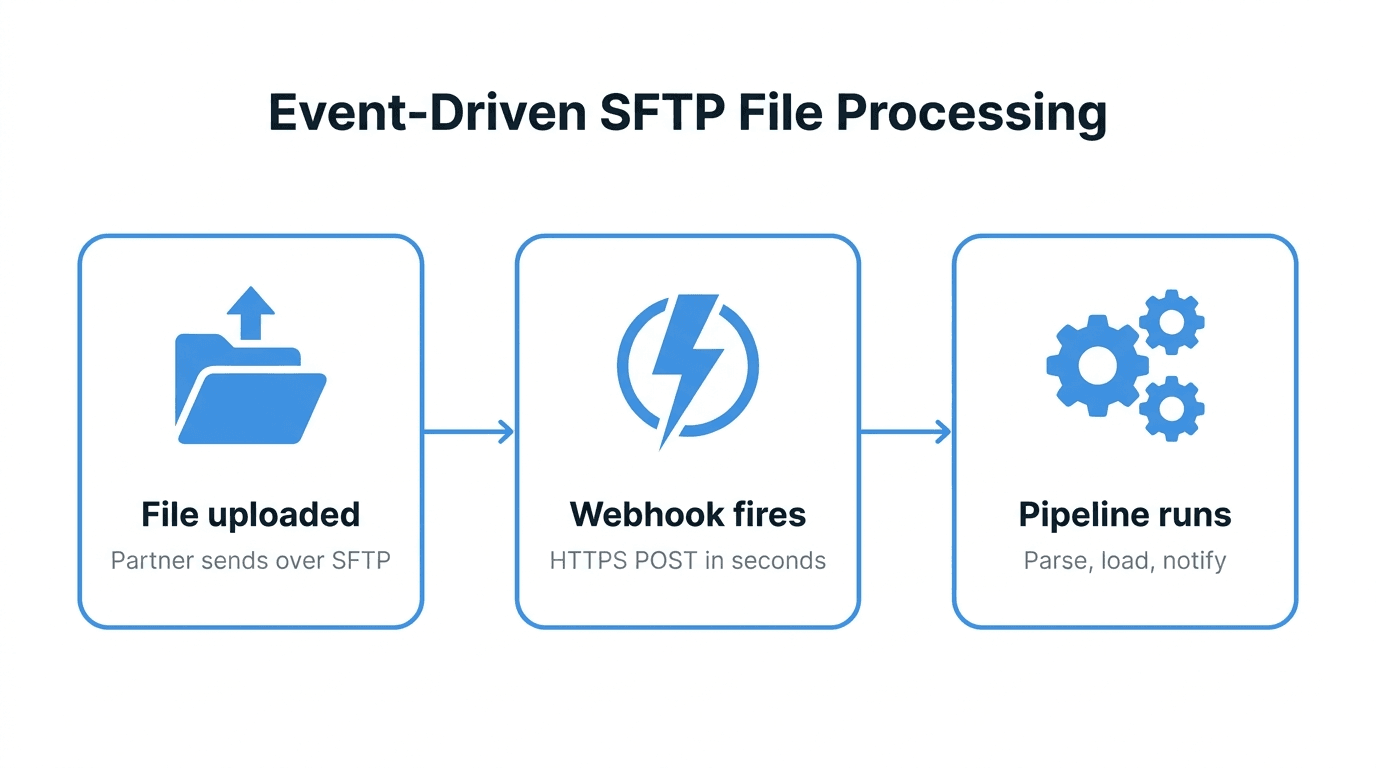
For faster ingestion, configure your MFT platform to emit notifications when new files arrive. A webhook or message queue event can trigger the pipeline immediately, reducing the delay between file delivery and data availability.
Checksum validation
Before loading a file into the warehouse, validate its integrity using checksums. Many MFT platforms generate checksums automatically, allowing the pipeline to verify that the file was not corrupted during transfer.
File archiving
After a file has been successfully loaded, move it to an archive directory on the SFTP server or in cloud storage. This keeps the active directory clean and provides a backup in case reprocessing is needed.
Metadata enrichment
Capture metadata from the transfer, such as the source, timestamp, file size, and transfer duration, and store it alongside the data in the warehouse. This metadata is valuable for monitoring pipeline health and debugging issues.
Building a reliable extract layer
The extract phase is the foundation of any ELT pipeline. If data collection is unreliable, insecure, or poorly monitored, every downstream step suffers. SFTP and MFT provide the security, reliability, and auditability that this critical first stage demands.
Looking for a managed file transfer solution that fits into your data pipeline? Start a free trial of FilePulse or get in touch with our team.