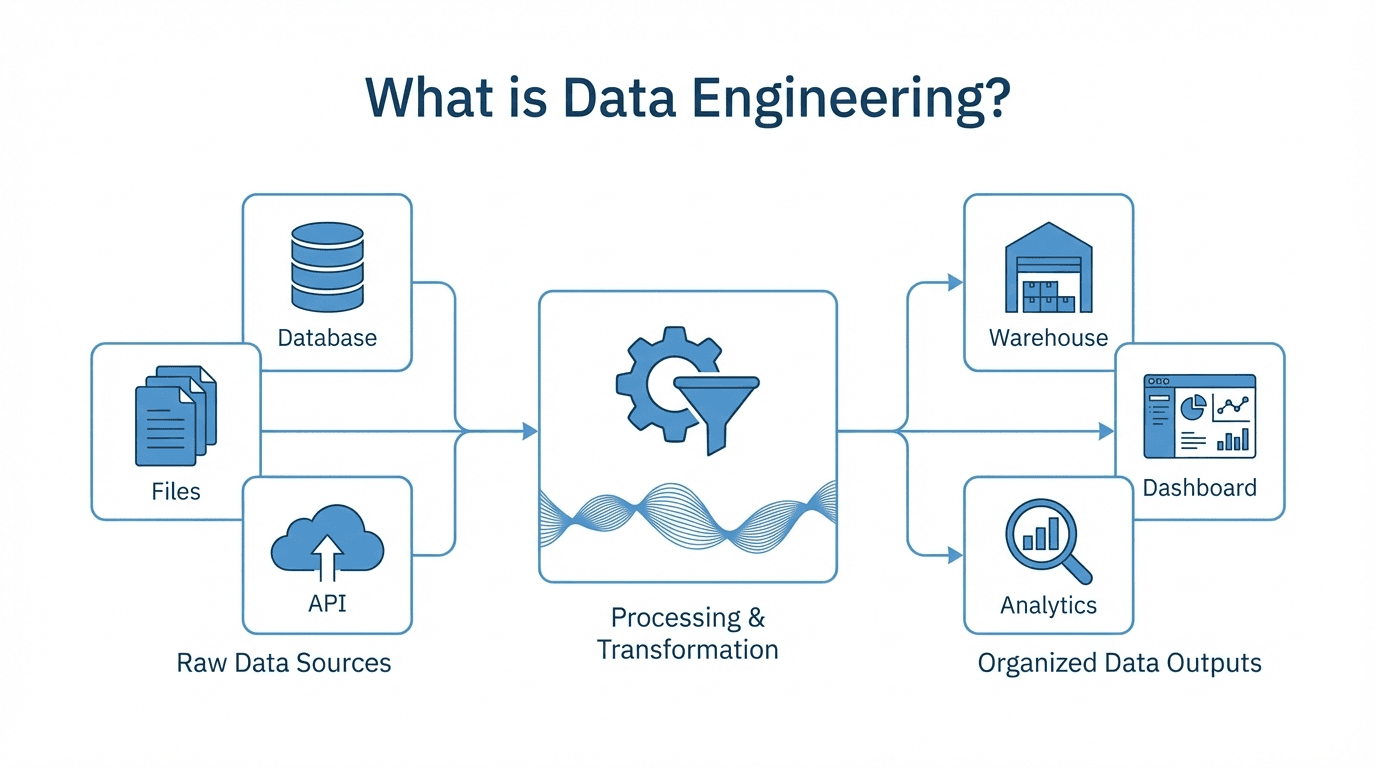
Data engineering is the discipline of designing, building, and maintaining the systems and infrastructure that collect, store, and prepare data for analysis. Without data engineering, the raw data generated by applications, sensors, users, and business processes would remain scattered, inconsistent, and inaccessible.
What do data engineers do?
Data engineers build and operate the pipelines and infrastructure that move data from where it is generated to where it is needed. Their responsibilities typically include:
- Building data pipelines - Creating automated workflows that extract data from source systems, transform it into usable formats, and load it into storage or analytics platforms.
- Managing data infrastructure - Setting up and maintaining databases, data warehouses, data lakes, and streaming platforms.
- Ensuring data quality - Implementing validation, monitoring, and alerting to catch issues like missing records, schema changes, or corrupted files.
- Optimizing performance - Tuning queries, managing partitioning strategies, and scaling infrastructure to handle growing data volumes.
- Enabling access - Making data available to analysts, data scientists, and business teams through well-organized, documented, and reliable systems.
Common data architectures
ETL vs ELT
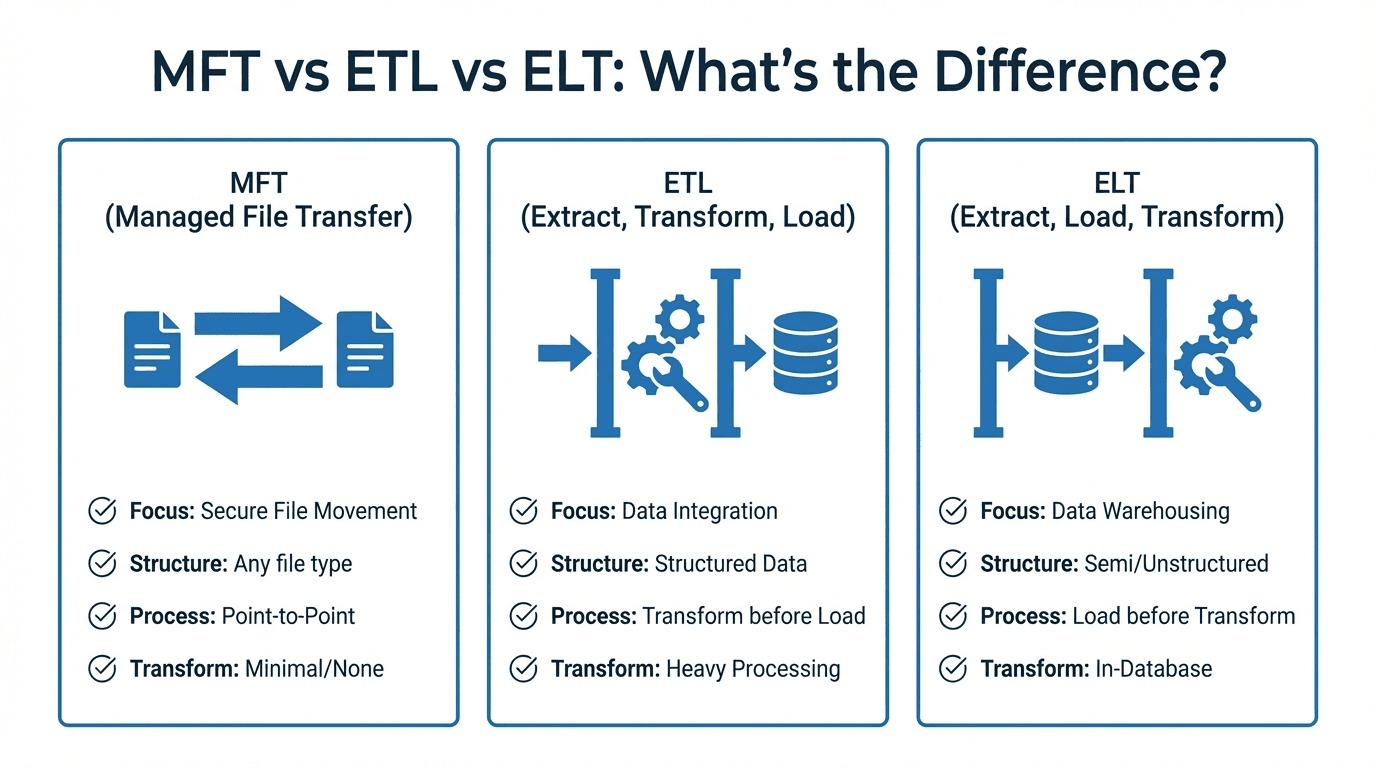
ETL (Extract, Transform, Load) extracts data from sources, transforms it into the desired structure, and then loads it into a target system. This approach is common in traditional data warehousing where the schema is defined upfront.
ELT (Extract, Load, Transform) loads raw data directly into a target system (often a cloud data warehouse) and transforms it afterward. This approach leverages the processing power of modern cloud platforms and preserves the original data for flexible downstream analysis.
Batch vs streaming
Batch processing handles data in discrete chunks at scheduled intervals (for example, hourly or daily). It is well suited for reporting, analytics, and workloads where near-real-time data is not required.
Stream processing handles data continuously as it arrives, enabling real-time or near-real-time insights. It is used for applications like fraud detection, live dashboards, and event-driven architectures.
Data warehouses, data lakes, and lakehouses
- Data warehouses store structured, processed data optimized for analytical queries. Examples include Snowflake, BigQuery, and Redshift.
- Data lakes store raw data in its native format (structured, semi-structured, or unstructured) at scale. Examples include Amazon S3 and Azure Data Lake Storage.
- Data lakehouses combine elements of both, providing the flexibility of a data lake with the query performance and governance features of a data warehouse. Examples include Databricks Lakehouse and Apache Iceberg-based architectures.
Real-world applications
Retail
Retailers use data engineering to consolidate sales data from thousands of store locations, e-commerce platforms, and supply chain systems. Pipelines aggregate this data into warehouses that power inventory management, demand forecasting, and personalized marketing.
Finance
Financial institutions rely on data pipelines to process transaction records, detect fraudulent activity, calculate risk metrics, and generate regulatory reports. Timeliness and accuracy are critical in this domain.
Healthcare
Healthcare organizations use data engineering to integrate electronic health records, lab results, claims data, and device telemetry. This data supports clinical decision-making, population health analysis, and compliance reporting.
Technology
Tech companies build data pipelines to collect user interaction data, application logs, and system metrics. These pipelines feed product analytics, A/B testing platforms, and machine learning model training workflows.
Required skills for data engineers
- Programming - Python and SQL are foundational. Java and Scala are common in big data ecosystems.
- Data modeling - Understanding how to design schemas for analytical and transactional workloads.
- Pipeline orchestration - Tools like Apache Airflow, Prefect, and Dagster for scheduling and monitoring workflows.
- Cloud platforms - Familiarity with AWS, Google Cloud, or Azure services for compute, storage, and data processing.
- Databases and warehouses - Experience with relational databases, columnar stores, and cloud data warehouses.
- Streaming technologies - Kafka, Kinesis, or Pulsar for real-time data ingestion and processing.
Challenges in data engineering
- Data quality - Inconsistent formats, missing values, and schema drift are constant challenges. Building robust validation and monitoring is essential.
- Scaling - As data volumes grow, pipelines need to scale without becoming fragile or expensive to operate.
- Integration complexity - Data comes from dozens or hundreds of sources, each with its own format, schedule, and reliability characteristics.
- Security and compliance - Sensitive data must be encrypted, access-controlled, and auditable throughout the pipeline.
How MFT solutions help
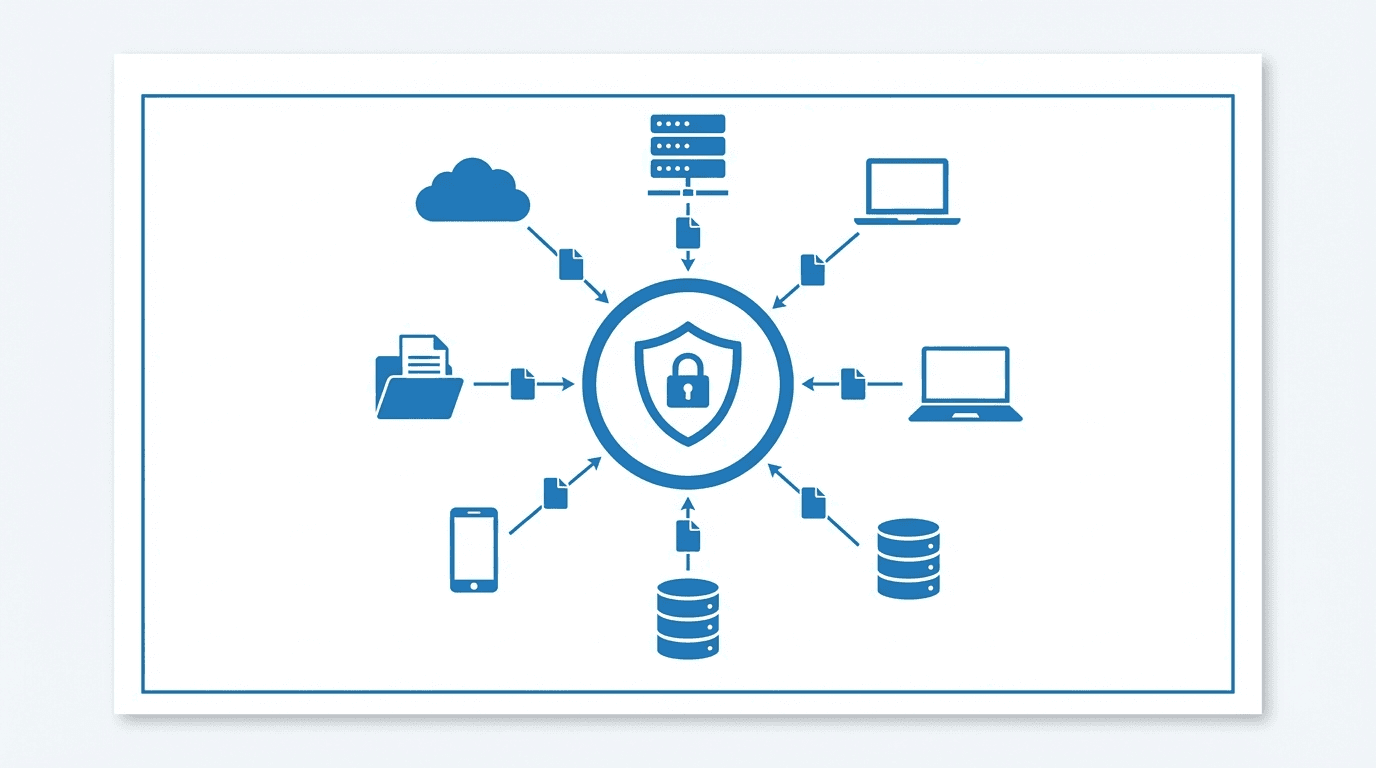
Managed File Transfer platforms play a specific role in the data engineering ecosystem. Many data sources, especially in B2B contexts, deliver data as files over SFTP, FTPS, or HTTPS. MFT solutions handle the secure, reliable collection of these files, providing:
- Encrypted transport for sensitive data files.
- Automated scheduling to pick up files as they arrive or on a fixed schedule.
- Audit trails that track every file from source to destination.
- Error handling and retry logic to ensure files are not lost in transit.
These capabilities make MFT a natural fit for the extract stage of ETL and ELT pipelines, bridging the gap between external data sources and your internal data infrastructure.
Want a reliable way to collect files for your data pipelines? Start a free trial of FilePulse or contact our team to learn more.