Managed File Transfer (MFT), Extract-Transform-Load (ETL), and Extract-Load-Transform (ELT) are three technologies that frequently appear in data infrastructure conversations. While they can overlap, each serves a distinct purpose. Understanding the differences helps you choose the right tool for each part of your data pipeline.
What is MFT?
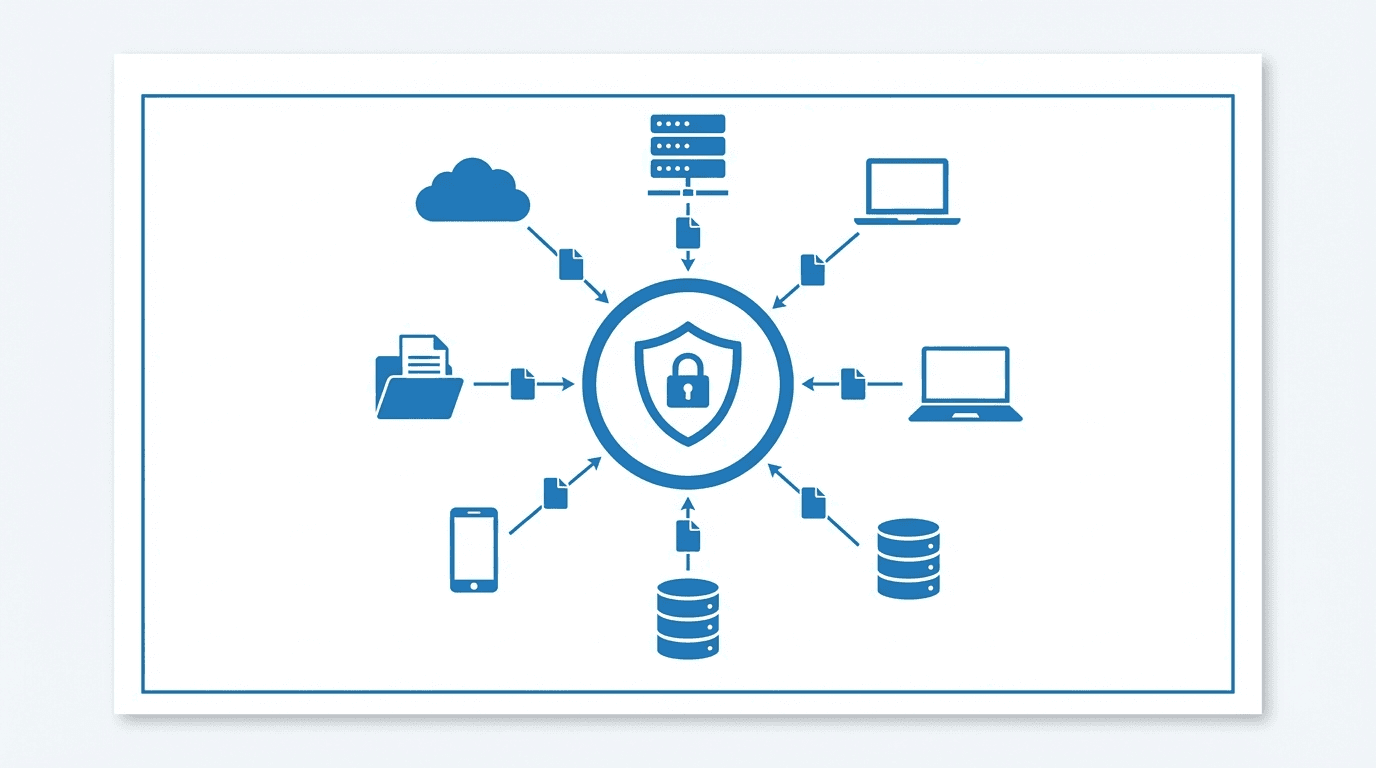
Managed File Transfer is a platform for securely moving files between systems, organizations, and users. It focuses on the transport layer: getting data from point A to point B reliably and securely.
Key features of MFT:
- Encryption in transit and at rest - Files are protected using protocols like SFTP, FTPS, and HTTPS.
- Automation - Scheduled and event-driven transfers remove manual steps from recurring workflows.
- Audit logging - Every file operation is tracked, supporting compliance and troubleshooting.
- Protocol flexibility - Support for multiple transfer protocols makes it easy to integrate with diverse systems.
Common MFT use cases: B2B file exchange, regulatory compliance, secure document delivery, and batch data collection from external partners.
What is ETL?
Extract-Transform-Load is a data integration pattern where data is pulled from source systems, transformed into a desired format or structure, and then loaded into a target system such as a data warehouse.
Key features of ETL:
- Data transformation - Cleaning, filtering, aggregating, and restructuring data before it reaches the destination.
- Schema enforcement - Ensuring data conforms to predefined schemas during the transform step.
- Batch processing - Typically operates on scheduled batches of data.
Common ETL use cases: Populating data warehouses, consolidating data from multiple sources, preparing data for business intelligence and reporting.
What is ELT?
Extract-Load-Transform flips the order of the last two steps. Data is extracted from source systems, loaded directly into a target system (often a cloud data warehouse), and then transformed in place using the processing power of the destination platform.
Key features of ELT:
- Raw data preservation - Data is loaded first, so the original records remain available for future transformations.
- Scalable compute - Transformation leverages the target platform's processing power, which scales on demand.
- Flexibility - New transformations can be applied to historical data without re-extracting from source systems.
Common ELT use cases: Cloud data warehouse ingestion, data lake architectures, and analytics workflows where transformation requirements evolve frequently.
Core differences between MFT, ETL, and ELT
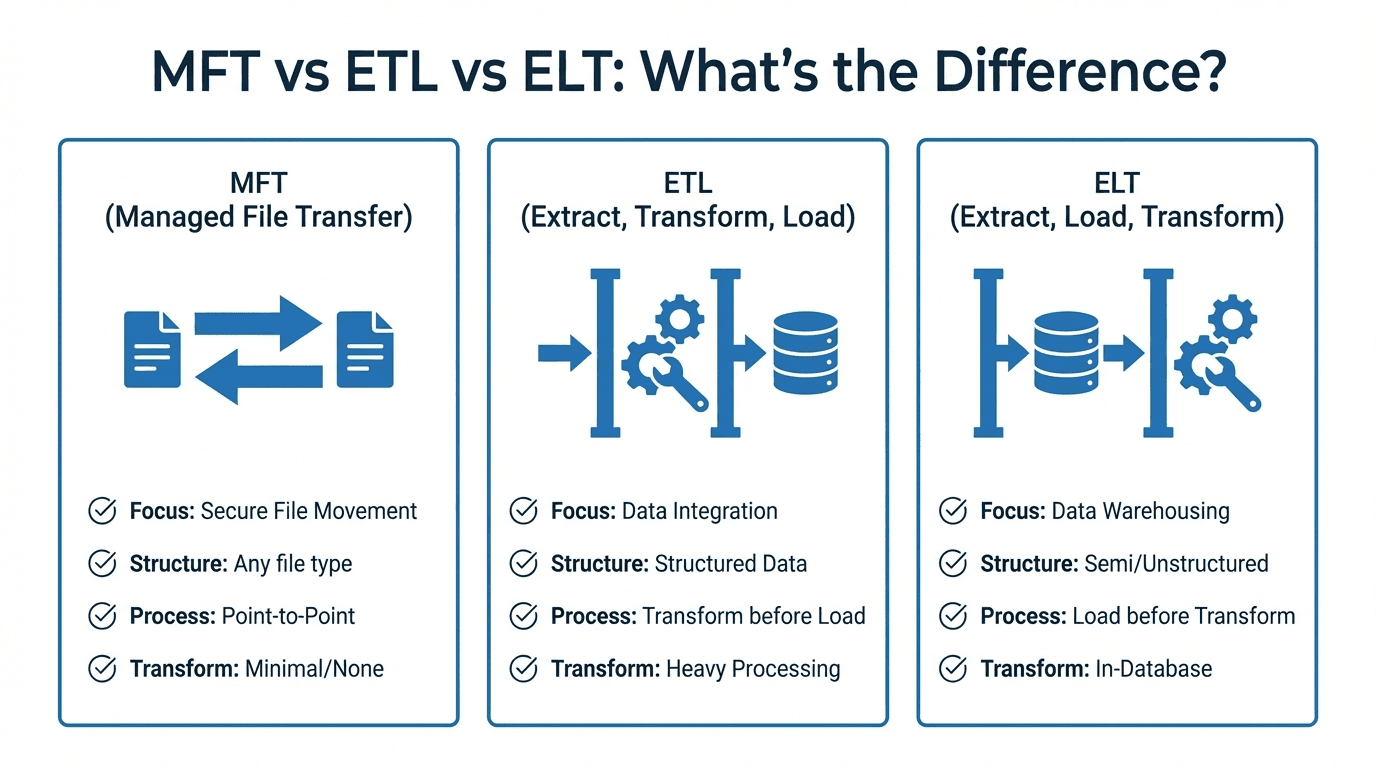
| Aspect | MFT | ETL | ELT | |---|---|---|---| | Primary purpose | Secure file transport | Data integration with pre-load transformation | Data integration with post-load transformation | | Data handling | Moves files as-is | Transforms data before loading | Loads raw data, transforms after | | Security focus | Encryption, access controls, audit trails | Varies by tool | Varies by tool | | Transformation | None (transport only) | Before loading | After loading | | Best for | File exchange, compliance, B2B workflows | Structured reporting, data warehousing | Cloud-native analytics, flexible schemas |
How they complement each other
MFT, ETL, and ELT are not competing technologies. In many organizations, they work together as different layers of the same data infrastructure.
MFT handles the secure transport of files between organizations or systems. Once files arrive, an ETL or ELT pipeline picks them up, processes the data, and loads it into the appropriate destination. MFT ensures the file gets there safely. ETL or ELT ensures the data inside is structured and ready for analysis.
Real-world example: retailer inventory data
Consider a retailer that receives daily inventory files from hundreds of suppliers. Each supplier sends a CSV or XML file with product quantities and pricing.
- MFT receives the files from each supplier over SFTP, verifying identities and encrypting transfers. Audit logs confirm every file was delivered.
- ETL or ELT picks up the landed files, normalizes the varying formats into a consistent schema, and loads the clean data into a data warehouse for reporting and demand forecasting.
Without MFT, the retailer would need custom scripts to handle secure file collection from each supplier. Without ETL or ELT, the raw files would sit unused without being transformed into actionable data.
Choosing the right tool
- Choose MFT when your primary need is moving files securely and reliably, especially with external partners or across organizational boundaries.
- Choose ETL when you need to transform and clean data before it enters your warehouse, and your transformation logic is well defined.
- Choose ELT when you want to load data quickly into a cloud platform and transform it later, giving your team flexibility to iterate on data models.
- Use them together when your workflow involves receiving files from external sources, processing the data, and loading it into analytical systems.
Ready to handle the secure transport layer of your data pipeline? Start a free trial of FilePulse or contact our team to discuss your use case.