Healthcare organizations handle some of the most sensitive data in any industry. Patient records, insurance claims, lab results, and prescriptions all contain protected health information (PHI) that must be transferred securely. SFTP is one of the most widely used protocols for meeting the file transfer requirements of HIPAA.
HIPAA and File Transfer Requirements
The Health Insurance Portability and Accountability Act (HIPAA) establishes national standards for protecting patient health information. The Security Rule requires covered entities and their business associates to implement administrative, physical, and technical safeguards for electronic PHI (ePHI).
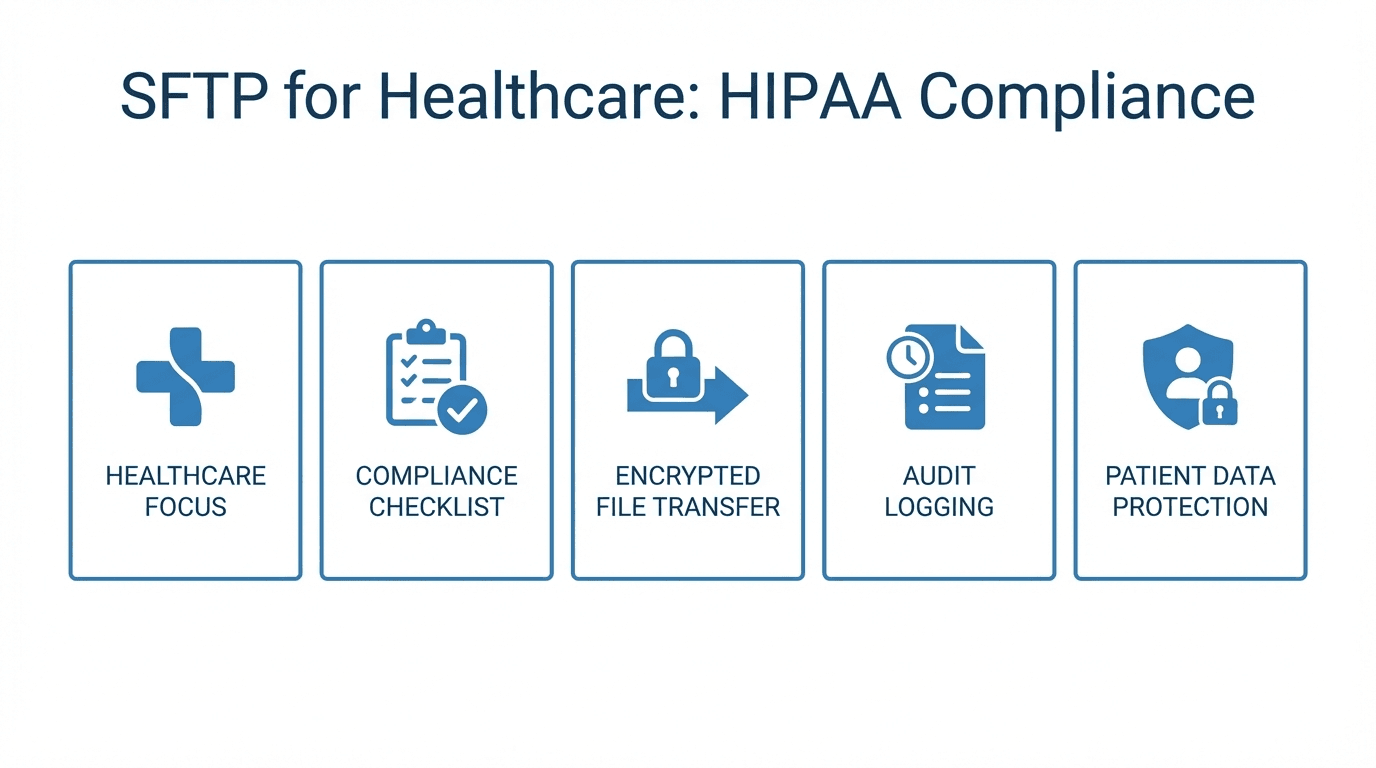
For file transfers, the key requirements include:
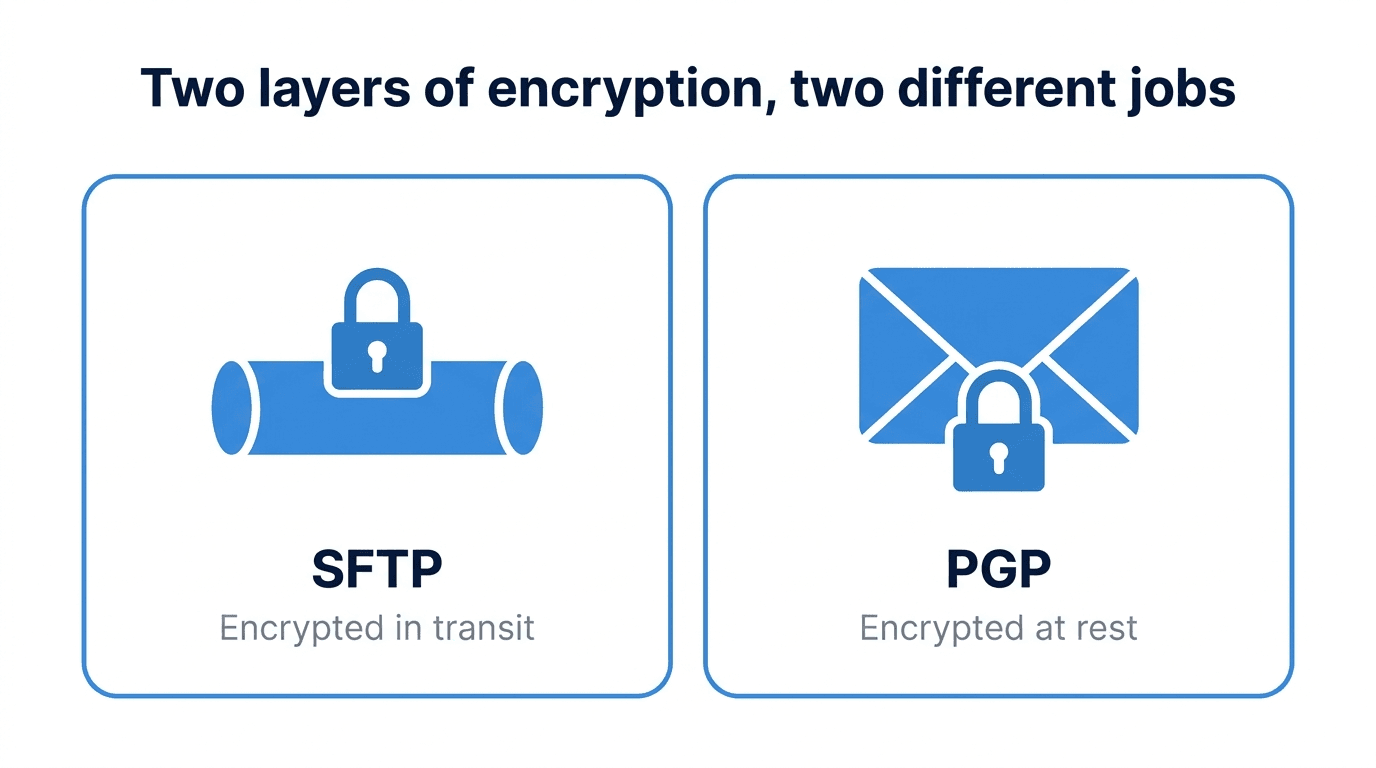
- Encryption in transit: ePHI must be encrypted when transmitted over a network.
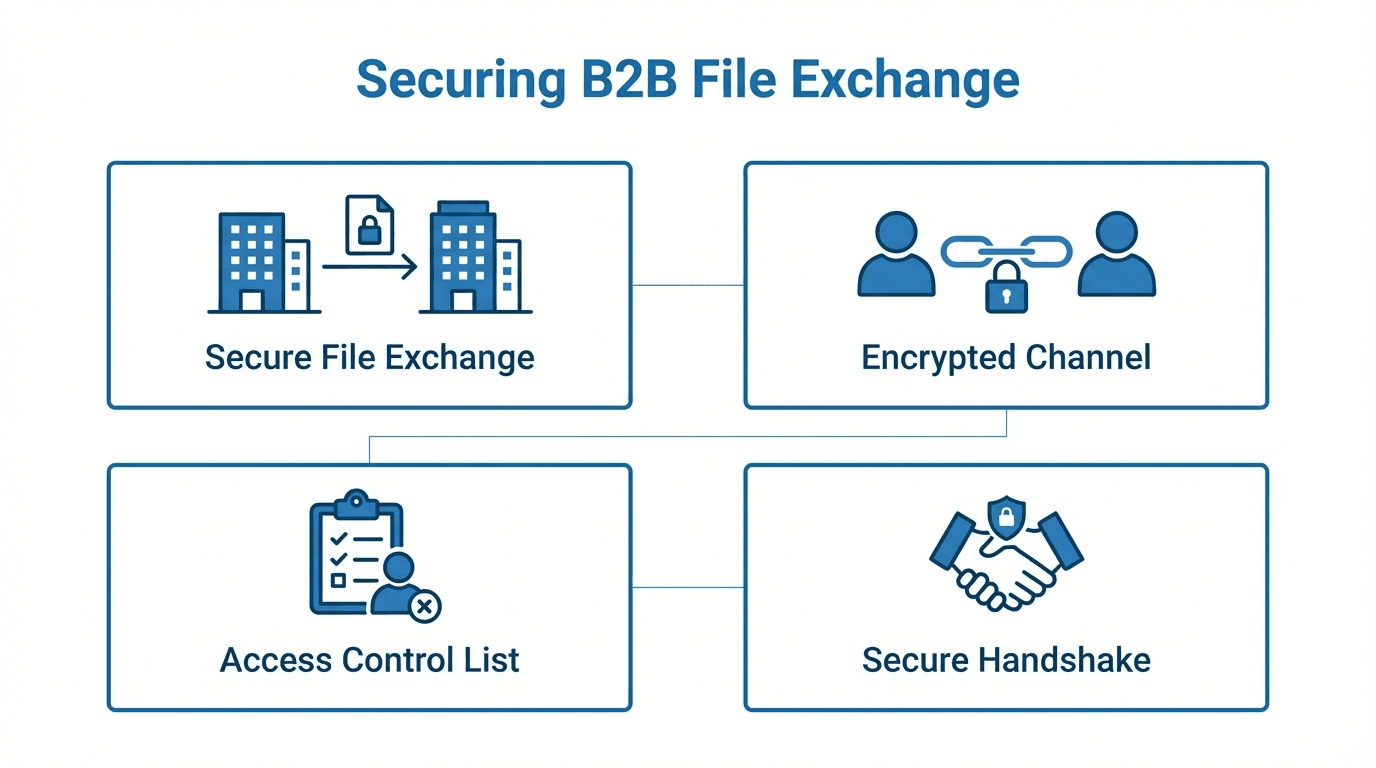
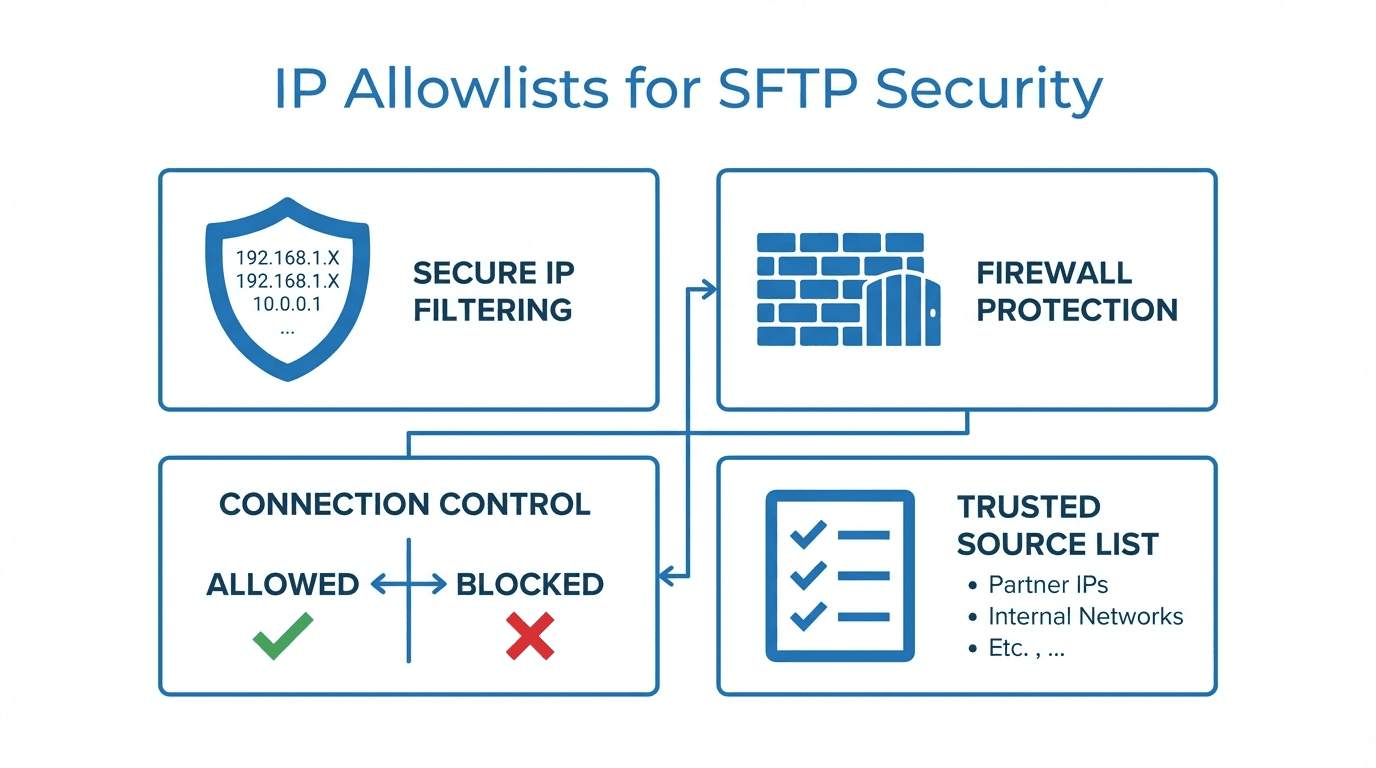
- Access controls: Only authorized individuals should be able to access or transfer ePHI.
- Audit controls: Organizations must maintain records of who accessed ePHI, when, and what actions they performed.
- Integrity controls: Mechanisms must be in place to ensure that ePHI is not altered or destroyed during transfer.
Why SFTP Meets HIPAA Standards
SFTP is well suited for HIPAA compliance because it addresses each of these requirements directly:
- Encryption: SFTP encrypts all data in transit using SSH, preventing interception by unauthorized parties. Both the file contents and the commands sent during the session are encrypted.
- Authentication and access controls: SFTP supports SSH key authentication and password-based login, and administrators can define granular permissions per user. This ensures only authorized personnel can access specific files and directories.
- Audit trails: SFTP servers can log every connection, file upload, download, and directory listing. These logs provide the audit trail that HIPAA requires.
- Data integrity: SSH includes built-in integrity checks using message authentication codes (MACs), ensuring that files are not tampered with during transfer.
Business Associate Agreements
If a healthcare organization uses a third-party service for file transfers, HIPAA requires a Business Associate Agreement (BAA). This is a contract that holds the service provider accountable for protecting PHI according to HIPAA standards. When choosing a managed SFTP provider, always confirm that they are willing to sign a BAA.
Common Healthcare File Transfer Scenarios
SFTP is used across many healthcare workflows:
- Insurance claims: Submitting and receiving claims data between providers and payers.
- Lab results: Transferring test results from laboratories to ordering physicians or hospital systems.
- Patient records: Sharing records between healthcare facilities during referrals or transfers of care.
- Pharmacy data: Exchanging prescription information between providers and pharmacies.
- Billing and remittance: Sending payment and explanation-of-benefits files between organizations.
Best Practices for HIPAA-Compliant File Transfer
- Use SSH key authentication instead of passwords wherever possible.
- Enable comprehensive audit logging and retain logs for at least six years, as HIPAA requires.
- Apply the principle of least privilege so each user can only access the files they need.
- Encrypt data at rest in addition to encrypting data in transit.
- Review access regularly and revoke credentials for former employees or partners promptly.
- Test your disaster recovery plan to ensure file transfer services can be restored quickly after an incident.
How FilePulse Helps with HIPAA Compliance
FilePulse provides a managed SFTP platform designed with compliance in mind. Features that support HIPAA requirements include detailed audit logs with full event history, SSH key and password authentication, per-user access controls and directory isolation, encryption in transit and at rest, and the ability to sign a BAA.
By using FilePulse, healthcare organizations can focus on patient care rather than infrastructure management, while maintaining the security and compliance standards that HIPAA demands.
Get started with FilePulse or contact us to discuss your healthcare file transfer needs.