Data sovereignty is the principle that data is subject to the laws and regulations of the country or region where it is stored or processed. For organizations that transfer files across borders, understanding and complying with data sovereignty requirements is not optional. It is a legal and operational necessity.
What Is Data Sovereignty?
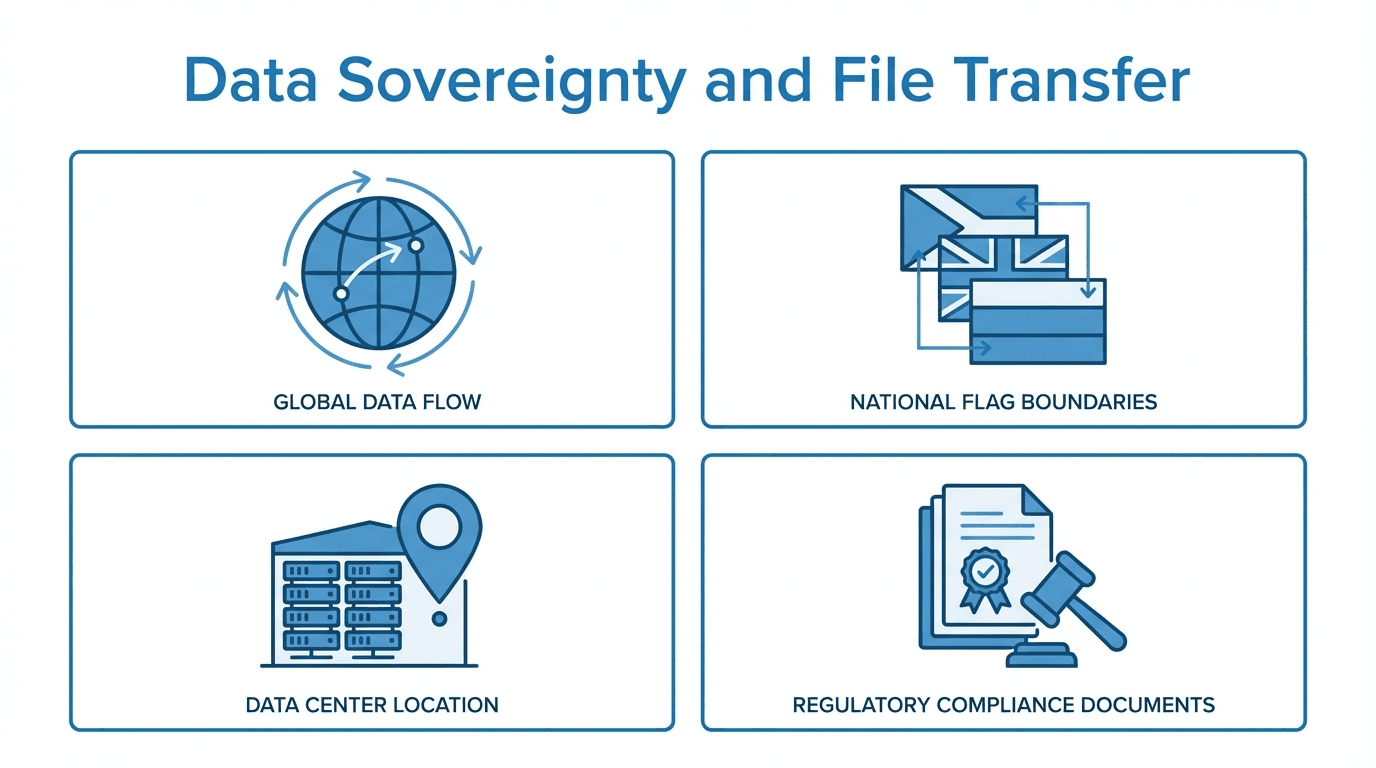
At its core, data sovereignty means that governments have authority over data within their borders. When you store a file in a datacenter in Frankfurt, German and EU laws apply to that data. When you store it in Virginia, US federal and state laws apply.
This becomes complex when your file transfer workflows involve partners, clients, or systems in multiple countries. A single SFTP server in one region may not satisfy the requirements of all the jurisdictions you operate in.
Why It Matters for File Transfer
File transfer systems are often the primary mechanism for exchanging sensitive data between organizations. This data frequently includes:
- Personal information (customer records, employee data)
- Financial data (invoices, payment details, tax filings)
- Healthcare records (patient data, lab results)
- Legal documents (contracts, compliance filings)
If this data crosses borders without proper controls, your organization may face regulatory penalties, contract violations, or loss of customer trust.
Regulations by Region
European Union (GDPR)
The General Data Protection Regulation restricts the transfer of personal data outside the EU unless the receiving country provides adequate data protection. Organizations must implement Standard Contractual Clauses (SCCs), binding corporate rules, or rely on adequacy decisions for specific countries.
For file transfer, this means ensuring that SFTP servers processing EU personal data are located within the EU, or that appropriate legal mechanisms are in place for cross-border transfers.
United States
The US does not have a single federal data privacy law. Instead, a patchwork of state laws and sector-specific regulations applies:
- CCPA/CPRA (California): Governs personal data of California residents
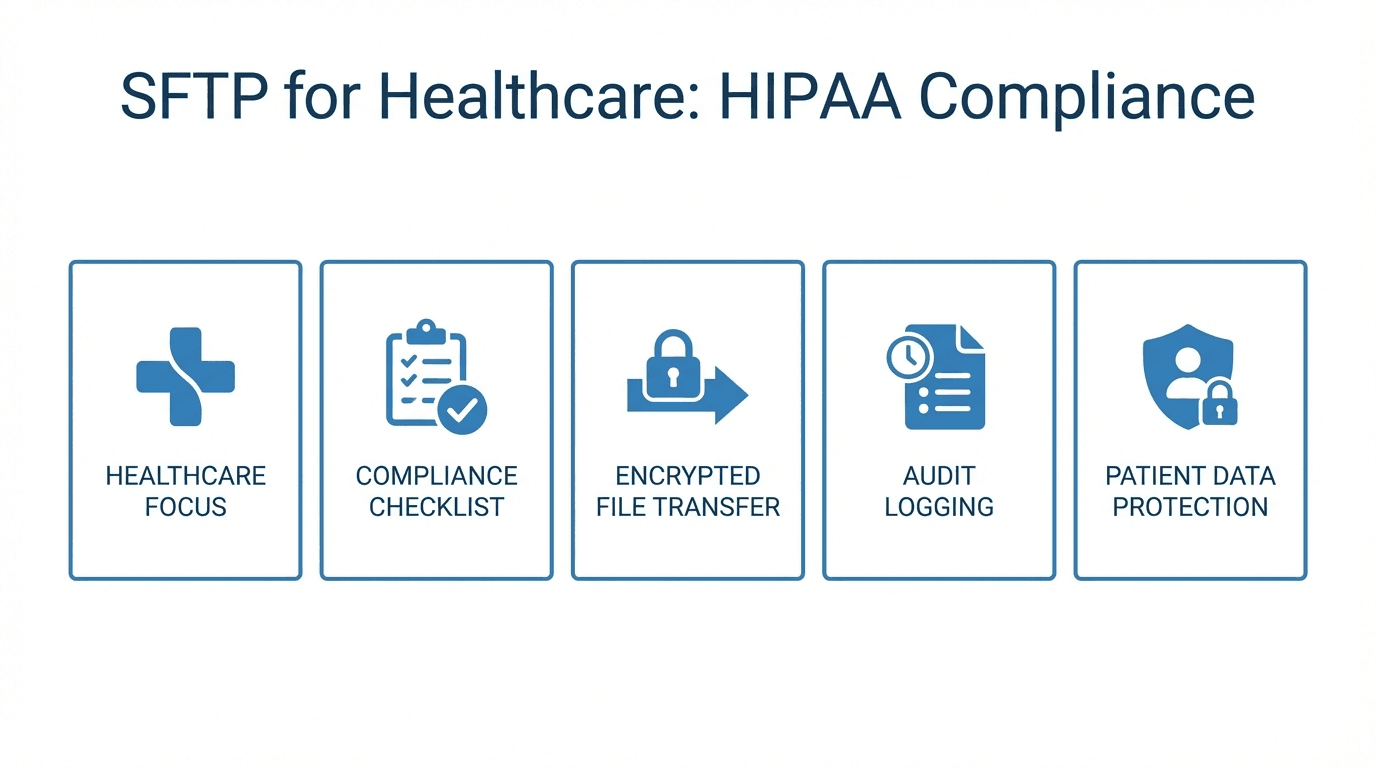
- HIPAA: Governs healthcare data
- SOX: Governs financial data for publicly traded companies
- State-level privacy laws: Virginia, Colorado, Connecticut, and others have enacted their own privacy frameworks
Many of these regulations require that organizations know where data is stored and maintain control over its movement.
Other Regions
- Canada (PIPEDA): Requires organizations to protect personal information and be transparent about cross-border transfers
- Australia (Privacy Act): Imposes accountability on organizations that transfer data overseas
- Brazil (LGPD): Similar in scope to GDPR, with restrictions on international data transfers
How BYOS Addresses Sovereignty Concerns
FilePulse's Bring Your Own Storage (BYOS) model is specifically designed to help with data sovereignty. Instead of storing your files on infrastructure controlled by a third party, you connect your own cloud storage account as the backend.
This gives you:
- Full control over data location: Choose the exact cloud region where your data resides
- Compliance with local regulations: Deploy storage in the same jurisdiction as your data subjects
- No vendor lock-in: Your data stays in your cloud account, governed by your policies
- Auditability: Your cloud provider's access logs and compliance certifications apply directly
Choosing Datacenter Locations
When setting up your file transfer infrastructure, select regions based on:
- Where your data subjects are located. Store EU customer data in EU regions, for example.
- Where your partners connect from. Proximity reduces latency and improves transfer performance.
- Regulatory requirements. Some industries require data to remain within specific national borders.
- Redundancy needs. Use multiple regions within the same jurisdiction for disaster recovery without crossing sovereignty boundaries.
Practical Steps for Compliance
- Map your data flows. Document where files originate, where they are stored, and where they are delivered.
- Classify your data. Identify which files contain personal, financial, or regulated information.
- Choose storage regions deliberately. Do not default to a single region for all workloads.
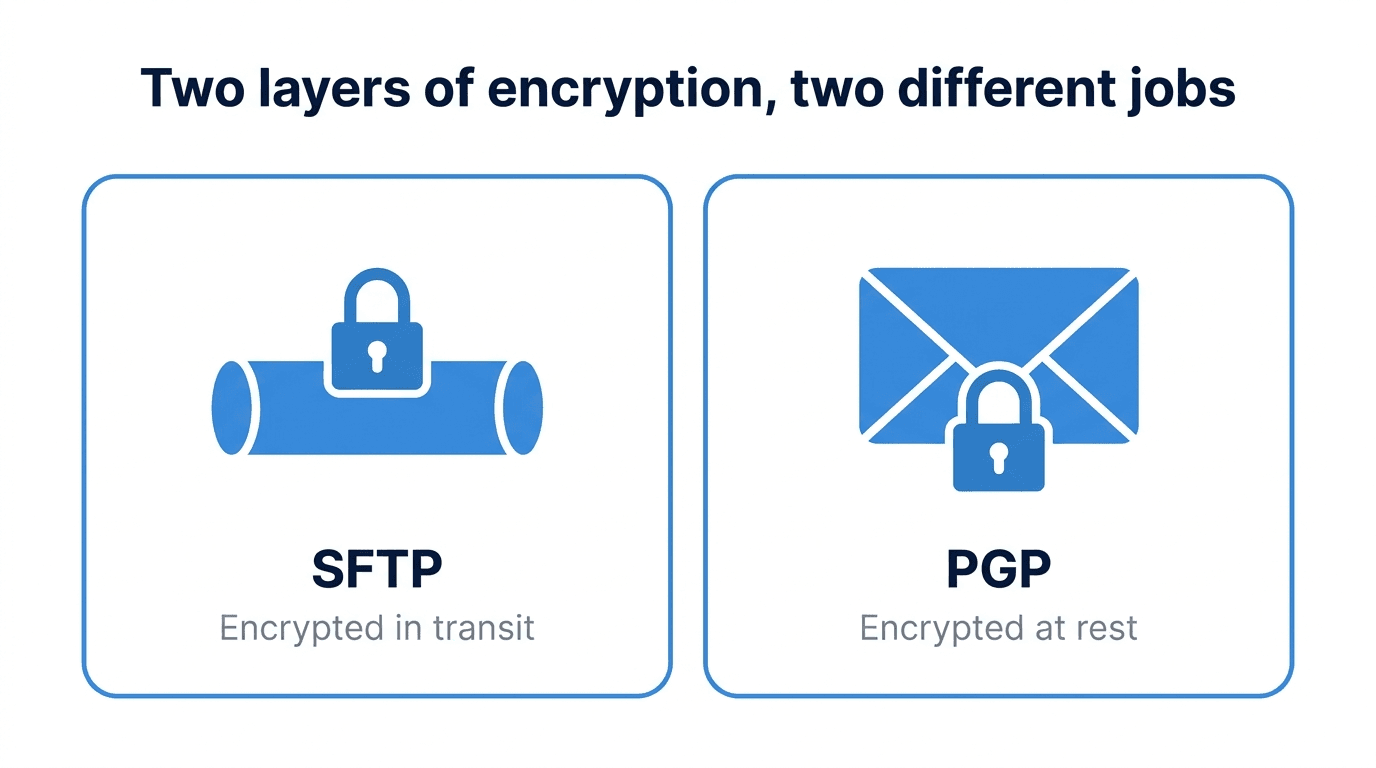
- Use encryption in transit and at rest. This is a baseline requirement across nearly all regulations.
- Maintain audit logs. Record who accessed what data, when, and from where.
- Review vendor agreements. Ensure your file transfer platform supports data residency requirements contractually.
Need a file transfer platform that respects data sovereignty? Start your free trial of FilePulse and connect your own storage in any region. Have compliance questions? Talk to our team.