Every organization that handles sensitive data faces compliance obligations. Whether you are processing healthcare records, financial transactions, or personal information, regulators expect you to protect that data at every stage, including when it moves between systems. Managed file transfer (MFT) plays a critical role in meeting these requirements.
This guide covers why compliance matters for file transfers, the key regulations you need to know, and how MFT platforms help you stay on the right side of them.
Why Compliance Matters for File Transfers
File transfers are one of the most common ways sensitive data moves between organizations. Invoices, medical records, payroll files, customer data, and financial reports all travel over SFTP, HTTPS, and other protocols daily.
Each of these transfers represents a potential compliance risk. If files are transferred without proper encryption, logging, or access controls, your organization could face:
- Regulatory fines that can reach millions of dollars for serious violations
- Legal liability from data breaches exposing customer or patient information
- Reputational damage that erodes trust with partners and customers
- Operational disruptions from mandatory remediation and audit responses
Compliance is not just about avoiding penalties. It is about building a foundation of trust and operational discipline that protects your organization and the people whose data you handle.
MFT in a Compliance Context
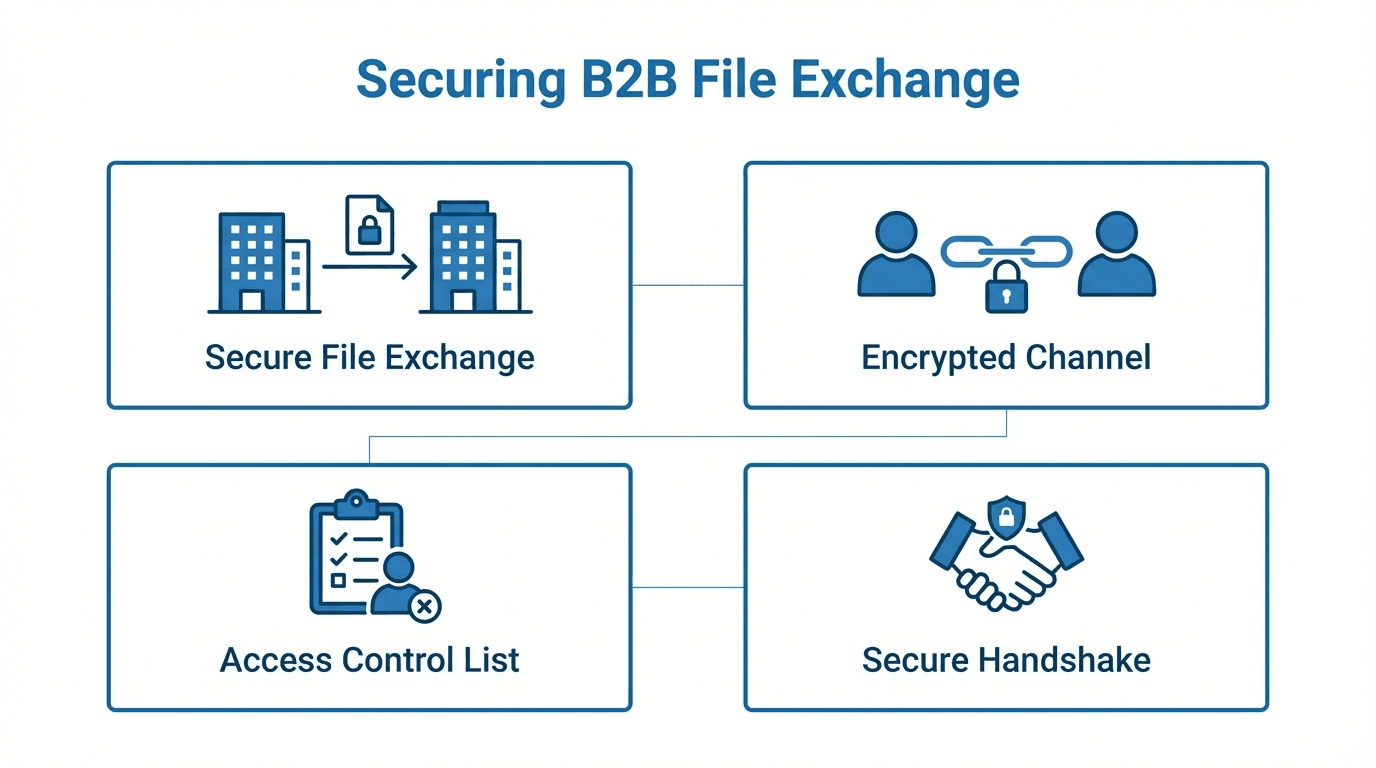
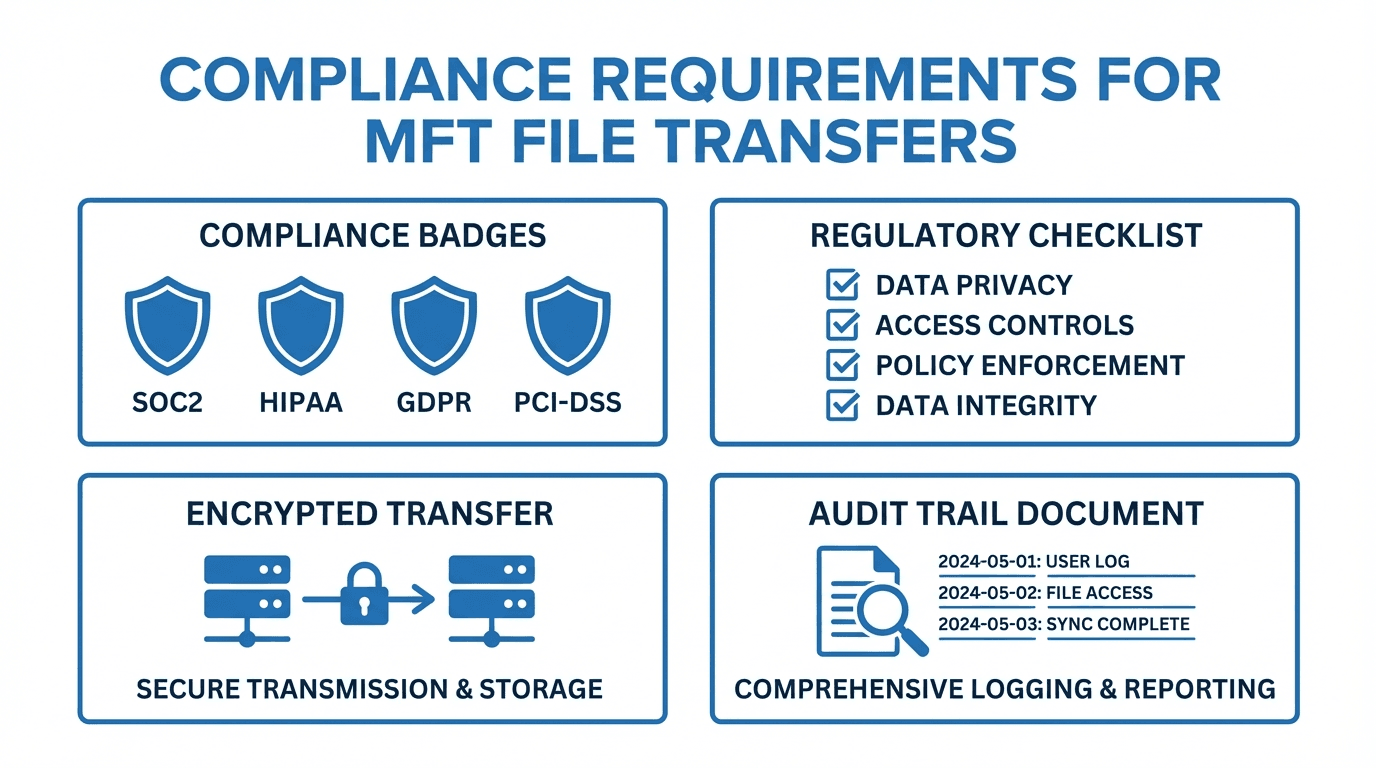
Managed file transfer is not a compliance framework in itself. It is a technology category that provides the controls and capabilities organizations need to comply with various regulations. A well-implemented MFT solution gives you:
- Encrypted data transport and storage
- Detailed audit trails for every transfer
- Granular access controls and authentication
- Automated retention and deletion policies
- Centralized visibility into file movement across your organization
These capabilities map directly to requirements found in most data protection regulations.
Key Regulations
GDPR (General Data Protection Regulation)
GDPR applies to any organization that processes personal data of EU residents, regardless of where the organization is based. Key requirements relevant to file transfers include:
- Data protection by design and by default. File transfer systems must be configured with security as the starting point, not an afterthought.
- Encryption of personal data. Data must be encrypted both in transit and at rest.
- Right to erasure. You must be able to locate and delete personal data when requested, including data in transit or stored in transfer workflows.
- Data processing records. You need to maintain records of all processing activities, including file transfers that involve personal data.
- Breach notification. If a transfer results in a data breach, you must notify the relevant supervisory authority within 72 hours.
HIPAA (Health Insurance Portability and Accountability Act)
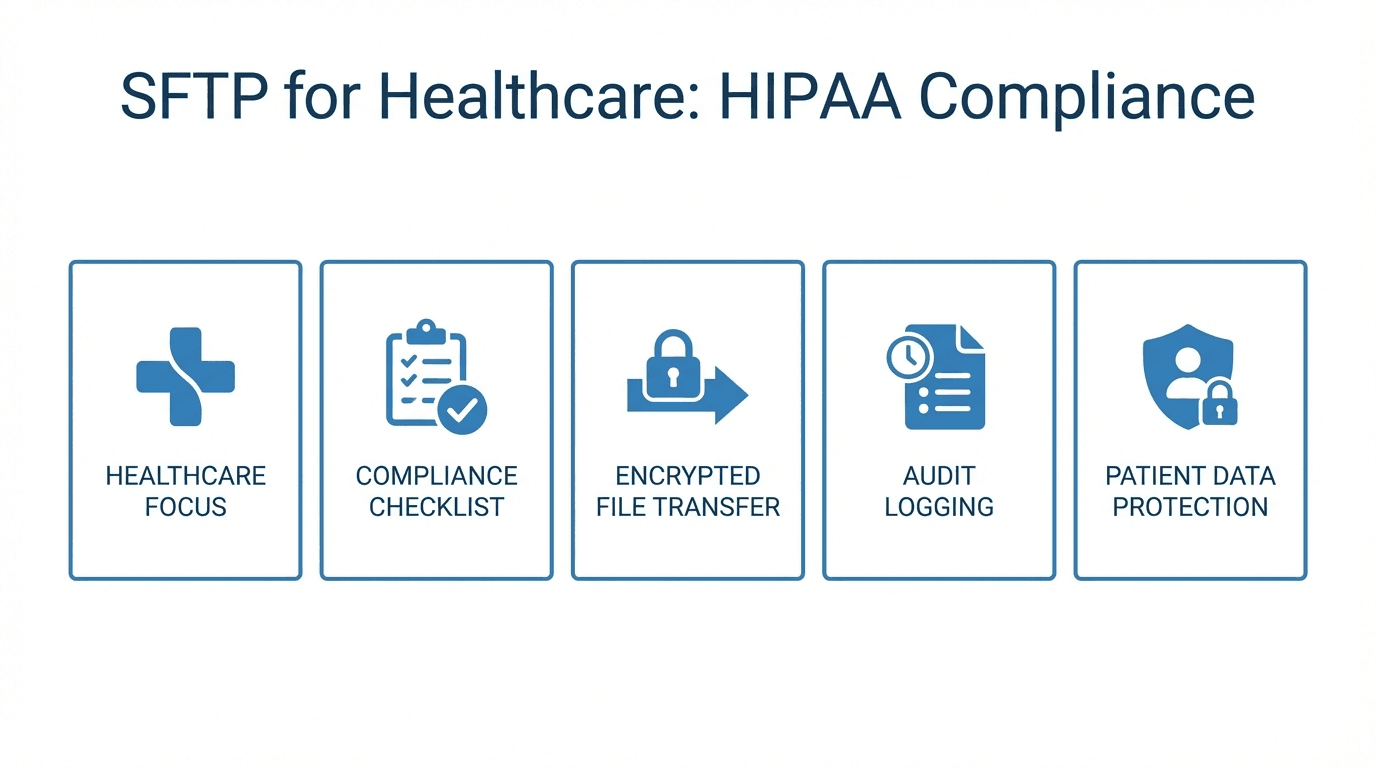
HIPAA governs the handling of protected health information (PHI) in the United States. File transfer requirements under HIPAA include:
- Encryption. PHI must be encrypted during transmission using protocols like SFTP or HTTPS with TLS.
- Access controls. Only authorized individuals should have access to files containing PHI.
- Audit controls. You must record and examine activity related to PHI, including file transfers.
- Integrity controls. Mechanisms must be in place to ensure PHI is not improperly altered during transfer.
- Business associate agreements. If you use a third-party MFT provider, they must sign a BAA acknowledging their compliance obligations.
PCI DSS (Payment Card Industry Data Security Standard)
PCI DSS applies to any organization that stores, processes, or transmits cardholder data. Relevant requirements include:
- Encrypt transmission of cardholder data across open, public networks. SFTP and HTTPS with strong TLS configuration satisfy this requirement.
- Restrict access to cardholder data by business need-to-know. Role-based access controls in your MFT platform enforce this.
- Track and monitor all access to network resources and cardholder data. Comprehensive audit logging is essential.
- Maintain a policy that addresses information security for all personnel. Your MFT procedures should be documented and enforced.
SOX (Sarbanes-Oxley Act)
SOX applies to publicly traded companies in the United States and focuses on financial reporting controls. File transfer requirements include:
- Internal controls over financial reporting. File transfers that move financial data must have documented controls.
- Audit trails. All file movements related to financial data must be logged and retained.
- Access controls. Financial data should only be accessible to authorized personnel.
- Change management. Changes to file transfer configurations should be documented and approved.
How MFT Enables Compliance
Encryption
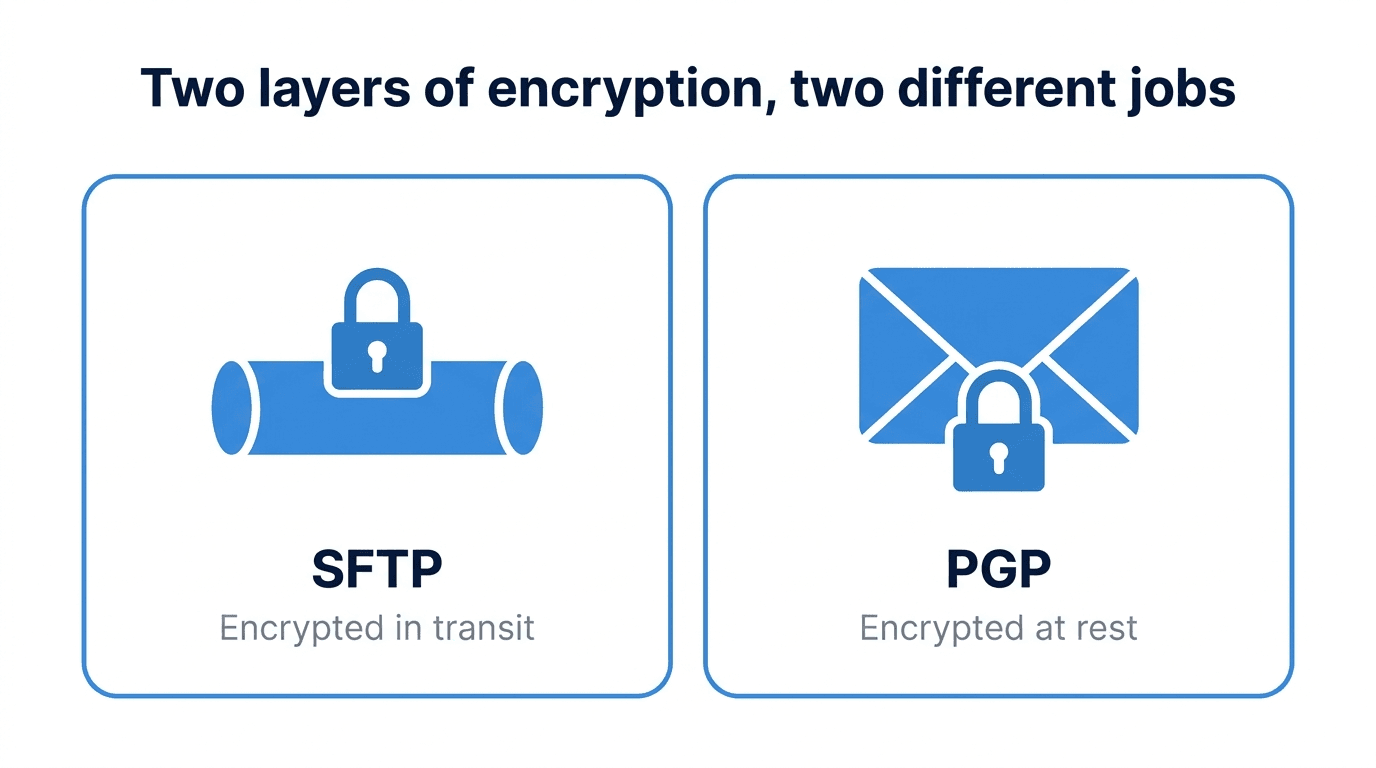
A compliant MFT platform encrypts data both in transit (using protocols like SFTP, HTTPS with TLS 1.2+) and at rest (using AES-256 or equivalent). This satisfies encryption requirements across GDPR, HIPAA, PCI DSS, and SOX.
Audit Trails
Every file transfer should be logged with details including the sender, recipient, filename, file size, timestamp, transfer status, and the protocol used. These logs must be tamper-evident and retained according to your regulatory requirements. MFT platforms centralize this logging, making audit preparation significantly less painful.
Access Controls
Role-based access controls (RBAC) ensure that users and partners can only access the files and folders they are authorized to use. Combined with strong authentication (SSH keys, multi-factor authentication), access controls satisfy the authorization requirements of most regulations.
Data Loss Prevention
MFT platforms can enforce policies that prevent sensitive data from being transferred to unauthorized destinations. This includes restricting which file types can be transferred, enforcing naming conventions, and blocking transfers that do not meet policy requirements.
Geofencing
Some regulations require that data remain within specific geographic boundaries. MFT platforms with geofencing capabilities can restrict where files are stored and transferred, helping you comply with data residency requirements.
Retention Policies
Automated retention and deletion policies ensure that files are kept for the required period and deleted when they are no longer needed. This supports GDPR's data minimization principle and helps manage storage costs at the same time.
Getting Started
Meeting compliance requirements for file transfers does not have to be overwhelming. Start by identifying which regulations apply to your organization, then evaluate your current file transfer practices against those requirements. A managed platform like FilePulse provides the encryption, audit logging, access controls, and retention policies you need to address compliance across multiple regulatory frameworks.
Sign up for FilePulse to get started with compliant file transfers, or contact us to discuss your specific compliance needs.